
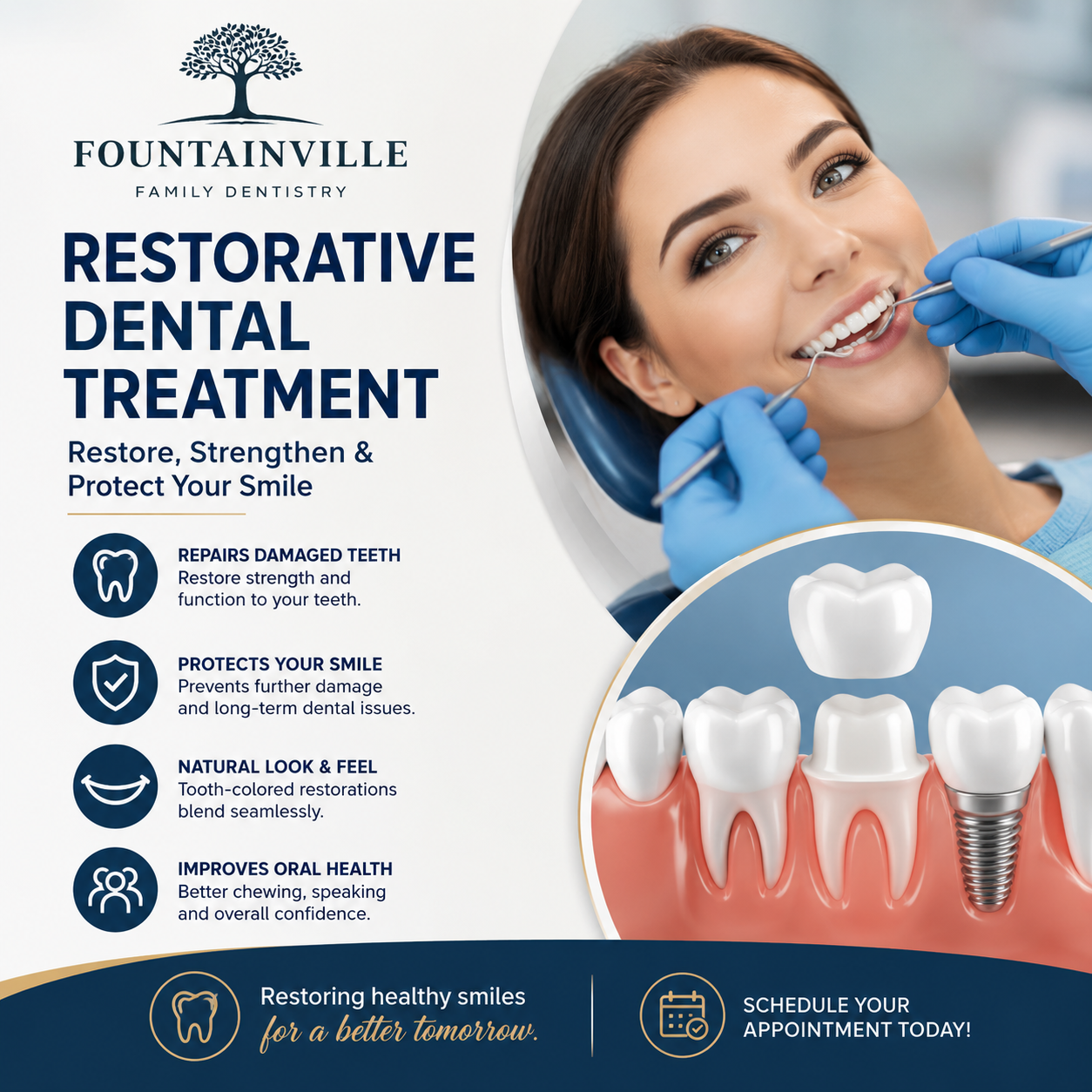
A healthy smile is about more than appearance—it also plays an important role in comfortable chewing, clear speech, and long-term oral health. When teeth become damaged by decay, fractures, wear, or other dental problems, restorative dental treatment can help repair the damage and protect the remaining natural tooth structure. Restorative dentistry focuses on repairing or replacing damaged or missing teeth while restoring proper function.
What Is Restorative Dental Treatment?
Restorative dental treatment includes professional procedures designed to bring damaged or weakened teeth back to healthy function. Common options include composite fillings, crowns, bridges, dental implants, and dentures. The right treatment depends on the condition of the tooth, the amount of remaining structure, and the patient’s overall oral health.
At Fountainville Family Dentistry, restorative and cosmetic treatments are designed to repair damaged teeth while also supporting a natural-looking smile. The practice offers tooth-colored composite fillings and zirconia or ceramic crowns among its restorative options.
How Restorative Treatment Protects Your Teeth
One of the biggest advantages of restorative care is that it can address dental problems before they become more extensive. Untreated tooth decay can progress deeper into a tooth and may eventually cause pain, infection, or tooth loss.
Composite fillings can repair cavities while preserving natural tooth structure. At Fountainville Family Dentistry, the decayed enamel and dentin are removed before a tooth-colored composite restoration is placed and shaped to restore the tooth’s natural bite and feel.
Crowns for Weakened or Damaged Teeth
When a tooth has extensive damage from fracture, large decay, or previous root canal treatment, a filling may not provide enough support. A dental crown can cover and protect the weakened tooth, helping restore its shape, strength, and function.
Fountainville Family Dentistry offers zirconia and ceramic crowns and uses digital intraoral scanning to create precise impressions after tooth preparation. This approach is intended to support an accurate fit and a strong seal around the restoration.
Restoring Function and Confidence
Missing or damaged teeth can affect more than your smile. They may make chewing and speaking less comfortable. Restorative dentistry aims to improve oral function while helping patients maintain a healthy, natural-looking smile.
Some restorative procedures can also provide cosmetic benefits. For example, tooth-colored fillings and natural-looking crowns can repair dental damage without compromising the appearance of your smile.
The Importance of Timely Dental Care
Waiting too long to address a damaged or decayed tooth can allow the problem to become more complicated. Early evaluation gives your dentist an opportunity to determine whether a filling, crown, bridge, implant, or another treatment is appropriate.
Regular dental examinations and good daily oral hygiene are also essential for maintaining restorations and protecting your natural teeth. Dental restorations are not permanent and may eventually require maintenance or replacement.
Conclusion
Restorative dental treatment is an important part of protecting your smile and maintaining long-term oral health. From tooth-colored fillings to crowns and other restorative options, timely treatment can repair damage, restore function, and help preserve your natural teeth. If you notice tooth pain, sensitivity, cracks, decay, or missing teeth, a professional dental evaluation can help determine the most appropriate solution. Fountainville Family Dentistry provides personalized restorative and cosmetic dental care designed to support both healthy function and a natural-looking smile.
Frequently Asked Questions
1. What is restorative dental treatment?
Restorative dental treatment repairs damaged, decayed, or missing teeth to improve oral health and function. Common treatments include fillings, crowns, bridges, implants, and dentures.
2. How do I know if I need a filling or crown?
The choice generally depends on the amount of healthy tooth structure remaining. Smaller areas of decay may be treated with a filling, while a significantly weakened tooth may require a crown for additional support.
3. Can restorative dentistry improve the appearance of my smile?
Yes. Certain restorations, such as tooth-colored composite fillings and natural-looking crowns, can improve both dental function and appearance.
4. How long can crowns and restorations last?
Longevity varies depending on the restoration, oral hygiene, bite forces, and other factors. Regular dental visits and proper home care can help extend the life of restorations.
5. Why should I treat tooth decay early?
Early treatment can prevent decay from progressing into deeper damage. Untreated decay may lead to pain, infection, and possible tooth loss.